
Voices Of Holocaust Survivors: The Story Of Esther Starobin

Updated: Aug 10
Mergen had the extraordinary opportunity to conduct an interview with Holocaust survivor Esther Starobin through the United States Holocaust Memorial Museum. As you read on, take a look at her personal story of escaping on the Kindertransport, surviving wartime challenges, and more.
Written By Docas Adams and Kamilla Jumayeva
At just five years old, Esther Starobin boarded a train to London with nothing but a tag pinned to her coat and her family’s hopes resting on her shoulders, one of thousands of children sent away through the Kindertransport. She was taken in by a foster family and raised in safety, but the same could not be said for her parents who she had been forced to leave behind.
The Night of Broken Glass
At just five years old, Esther Starobin boarded a train to London with nothing but a tag pinned to her coat and her family’s hopes resting on her shoulders, one of thousands of children sent away through the Kindertransport. She was taken in by a foster family and raised in safety, but the same could not be said for her parents who she had been forced to leave behind.
Everything changed on the night of November 9, 1938. Nazi officials encouraged waves of violence against Jewish communities across Germany. Windows were smashed, synagogues were set on fire, and Jewish homes and businesses were destroyed. The streets were left covered in broken glass, which is how the night came to be known as Kristallnacht, or "the Night of Broken Glass.”

In Aachen, Germany, Starobin’s sisters were on their way to school when they saw a synagogue burning and were told to turn back. It wasn’t something they talked about much later on, but a few details stayed with them. They remembered people quietly coming to their aunt’s house at night and being gone by morning. At the time, they may not have fully understood, but looking back, it was clear their aunt was helping people escape the country.
Esther mentioned that, "Kristallnacht convinced many German Jews, including my parents, that life under the Nazis had become intolerable."
People from neighboring villages, such as Adelsheim, joined in the destruction. Torah scrolls and other holy books were taken from synagogue's and burned, while residents were forced from their homes and mistreated. Fortunately, Esthers parents' home was off the main road, so they were spared that night.
In 1939, they made the decision to send all their daughters on a Kindertransport, a British rescue operation that brought about 10,000 Jewish children to Great Britain, escaping Nazi persecution.
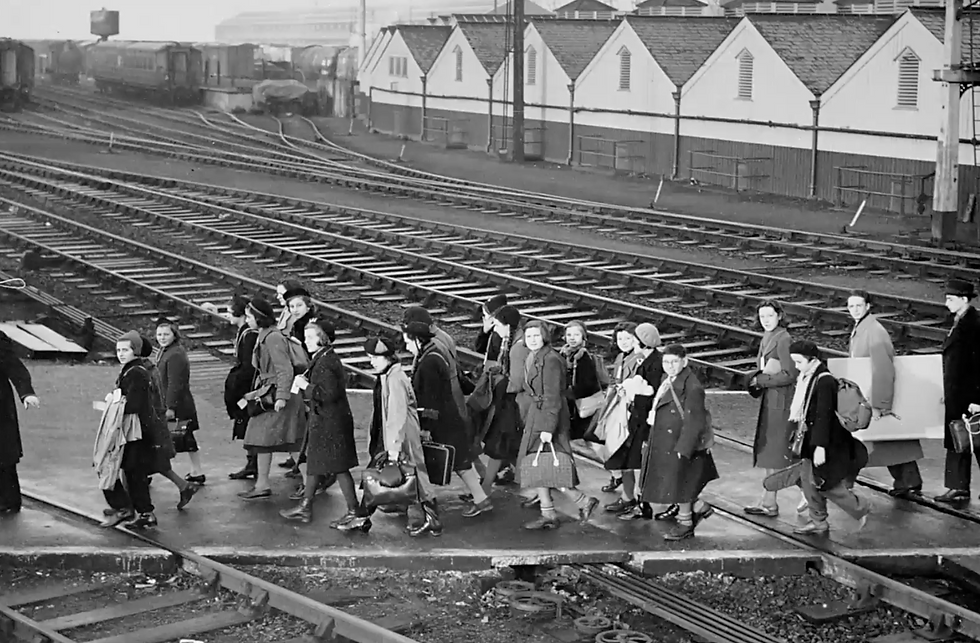
Following Kristallnacht, Jewish organizations such as the Quakers petitioned Parliament to allow Jewish children to enter England. Under the arrangement, the children were permitted to travel unaccompanied, and pay a fee of 50 pounds upon entry, which is equivalent to around $5,500 today.
Starobin’s sisters initially stayed in Aachen but left shortly afterward. Their Aunt Hannah, who was living in London at the time, helped arrange accommodations for them.
Life after escape
In June 1939, Esther arrived in London, just a few months after her sisters and only months before World War II officially began. She later reflected on the cruel way the Nazis tried to erase Jewish identities by mentioning, “Sarah was the name the Nazis added to all Jewish women’s names, just another way of separating us out from the rest of the population.”

Esther brought only a few cherished possessions from Germany, a small toy dog and a pair of shoes, which her foster mother carefully preserved and later displayed at the Holocaust Museum.
She was placed by the Quakers in a small rural community, where her foster father worked in a shoe factory owned by a Jewish man who helped arrange homes for children. Starobin was fortunate to be taken in by a loving Christian family, with whom she lived for eight years.
Shortly after arriving, she contracted scarlet fever and was quarantined, but she found comfort in the family’s son, Alan, who played with her through the window. Her sisters were able to visit occasionally, even though travel was difficult during the war.
From Gurs to Drancy to Auschwitz
While Esther lived in England, her parents and brother Herman remained in Germany.
On October 22, 1940, all Jews in Baden were ordered to report to local collection points, police stations, or assembly centers, with only one suitcase and supplies for three days.
Esther said, "My parents, my brother, and the other Jewish families of Adelsheim were sent to Gurs, a concentration camp in France. Men and women were separated. My father’s wooden leg wasn’t sent with him at first, so he wasn’t very mobile and my mother worked in the kitchen."
While adults remained trapped in the camp, French Jewish humanitarian organizations stepped in to help the children. The OSE (Oeuvre de Secours aux Enfants) provided housing, food, and education, eventually securing safe passage for many. In 1941, Starobin's brother was brought to the United States through this program, where he lived with an aunt and uncle and later helped transport over 1,000 Jews to America.

Tragically, Esther shared, "My parents were later sent from Gurs to Rivesaltes, and then ultimately to Drancy, which was the exit camp to Auschwitz. They were deported to Auschwitz on August 14, 1942, and murdered upon their arrival. I don’t remember my parents at all."
In the 1980s, Starobin’s sister Bertel revealed that she had preserved letters their parents had written from the camps. Most of the letters were from their mother, with their father adding a line or two.
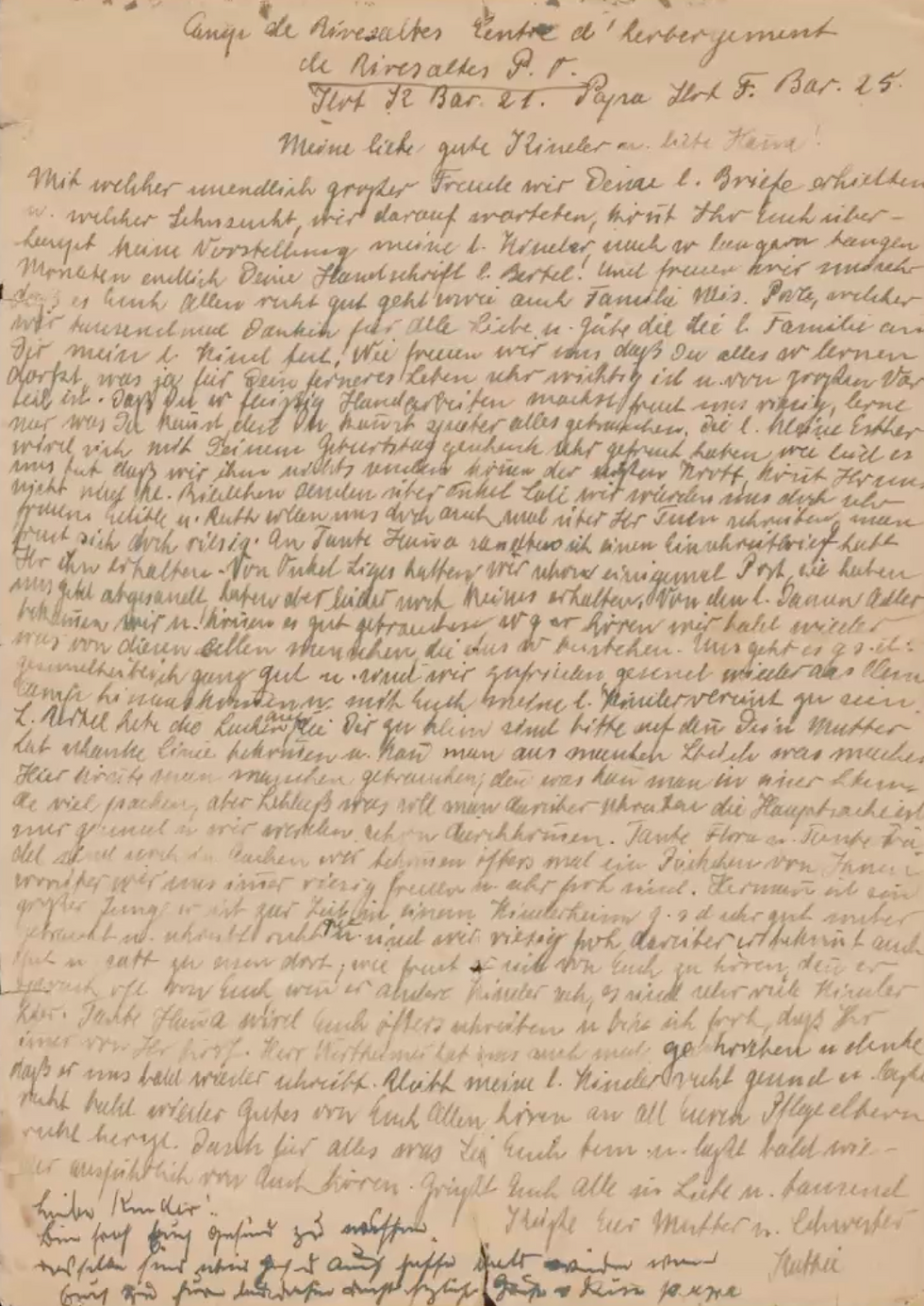
The letters described the harsh conditions, including how their mother had lost so much weight that she could fit into Bertel’s old clothes. She also mentioned that Herman had made it to the United States, and urged the family to join him and remain together.
By 1947, Bloomsbury House, a postwar organization that helped Jewish refugees relocate and connect with family abroad, arranged for Esther to come to the United States.
Her foster mother had written to her uncle, asking if she could remain in England, but he insisted that the family needed to be together. Esther had loved her life with the Harrisons and was reluctant to leave, but in November 1947, she sailed on the Queen Mary and finally reunited with her siblings in Washington, D.C.
Starting over in the United States
Life initially proved difficult in a crowded household with her aunt and uncle. Over time, her sisters found jobs and secured an apartment, ensuring Starobin finished high school and attended college. Together, they celebrated holidays and maintained the unity their mother had wished for.

When it came time to choose a career, opportunities for women were limited. Esther didn’t want to become a nurse, and social work required additional study, so she decided to pursue teaching. She loved working with both young children and middle schoolers, believing it was important to help students question what they learned, observed, and read.
As Esther looked back on her experiences, she shared words of advice she wished she could give her younger self, “If I could tell my younger self one thing during the Holocaust, it would be to look around and notice how people adapt and survive, how they accept those from other cultures, and what individuals can do to help others. I would remind myself to remember people’s names, because it is unfortunate that I blanked out many parts of my life when moving from one stage to another.”
Starobin concluded by speaking about the importance of sharing history and learning from it, understanding the causes of the Holocaust, and remaining aware of events happening in the world.


Comments